The coverage metric payers already score, with the numerator physically observed instead of assumed.
01
Definition
01.1
PDC and pPDC, Defined
PDC — Proportion of Days Covered — is the adherence measure U.S. payers already score. It is built from pharmacy fill dates: it shows the patient had the drug, not that a tablet left the bottle. pPDC — physically verified Proportion of Doses Covered — keeps the payer's frame and replaces the assumption with a record of each tablet leaving the bottle.
PDC — Proportion of Days Covered
Days covered by pharmacy claimsDays in the measurement period
≥ 80% counts as adherent in CMS Star Ratings measures. Possession only — no evidence a tablet left the bottle.
pPDC — physically verified Proportion of Doses Covered
Planned doses whose tablets were verified leaving the bottle on timeDoses the plan calls for in the period
Each tablet is verified as it leaves the bottle, in real time. Excess is logged, never scored above 1.
The formula
pPDC = Σ Covered(k) / |K|. Covered(k) = 1 when, for every strength bottle b the dose draws on, E_ontime(k, b) ≥ DosePlan(k, b); otherwise 0.
Three data paths, one score
1 · Device only, continuous: pPDC = Σ Covered(k) / |K|. 2 · Claims-gated, continuous: pPDC = Σ Cov(k) · Covered(k) / |K| — claims coverage first, then the device verifies timing. 3 · Multi-dose or cyclic: tablets in the window counted against DosePlan for each dose; cyclic plans included. Only the input changes.
The symbols
K — every dose the plan calls for in the analysis period · b — each strength bottle a dose draws on · Δ — the on-time window · E_ontime — tablets verified leaving in that window · DosePlan — tablets planned for that bottle · Cov — claims coverage.
Coledy publishes this definition openly, as a public description of the metric.
01.2
pPDC Metric: From Assumption to Physical Verification
Physically verified Proportion of Doses Covered. Others infer; Single-Tablet Physical Verification (STPV) verifies each tablet as it leaves the bottle, in real time.
PDC assumes. pPDC records.
PDC · claims
93% of days supplied — assumed, not verified. Possession only; no evidence a pill left the bottle.
Cap sensor · app self-report
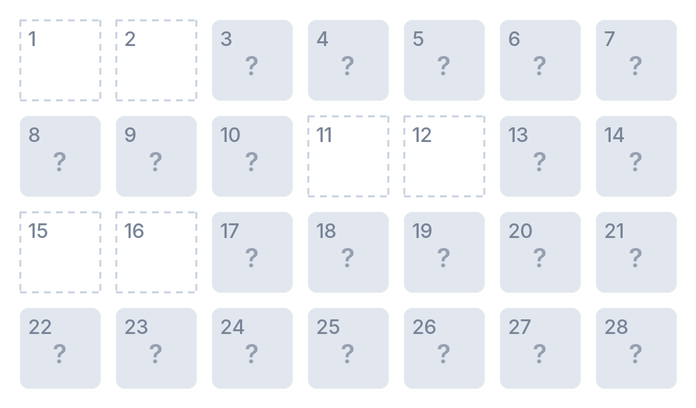
Openings logged — which pill, and when, unknown. A self-marked dose has no physical proof.
pPDC · physically verified
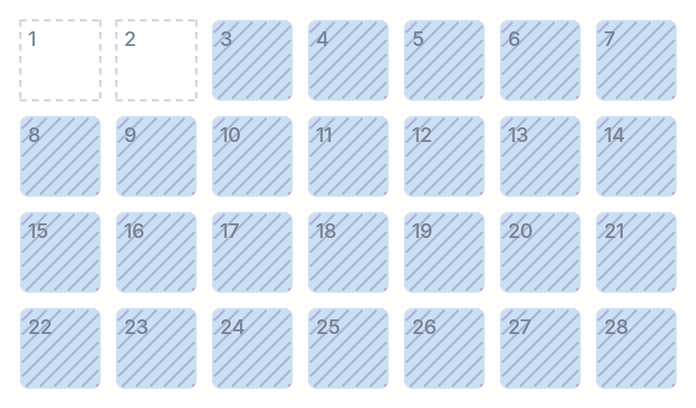
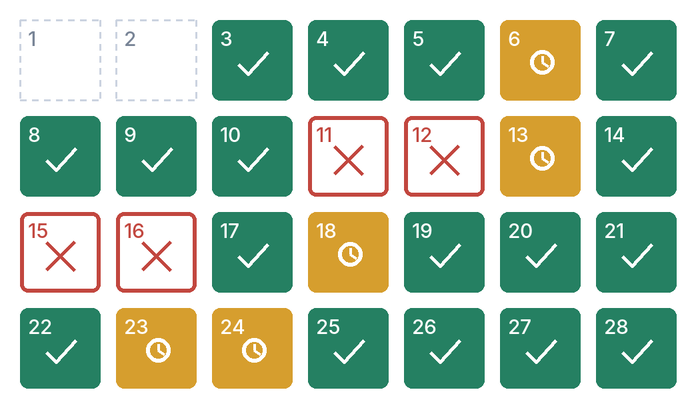
61% dose-level on time — each square is a dose: on time, late or missed.
Dashed: no supply · hatched: supplied, dispensing assumed · ?: opening logged, content unknown · ✓ on time · clock: late · ✕ missed.
Where the gap opens — twice-daily regimens lose 26.7 pp of timing adherence versus once-daily, and seven of the target drugs dose twice daily. Claims, pill counts and cap sensors measure days, not intervals. Coleman et al., J Manag Care Pharm 2012
Same patient, same 28 days — three metrics, three very different pictures. Figures below are illustrative.
01.3
From PDC to pPDC: The Five Dimensions of a Verified Dispense
PDC Assumes Five Things. pPDC Measures Them.
Both start from the same place. PDC stops there; the rest is what a verified dose adds.
The question
PDC — claims
pPDC — verified
What it unlocks
Did a tablet actually leave the bottle?
Assumed from days' supply
Verified per tablet, with a timestamp
Star Ratings stop resting on an assumption; a drug holiday stops reading as covered
How much of today's dose was dispensed?
A day is adherent or it is not
Partial doses are flagged, not credited
A part-dose never rounds up to a full one
At what interval?
Not visible at any resolution
Every event carries its own time
Twice-daily regimens lose 26.7 pp of timing adherence
Was more than the plan dispensed?
A refill looks identical either way
Logged separately, never scored above plan
A safety channel on narrow-tolerance agents
When does the bottle run out?
Only the next scheduled refill date
Counted down from verified dispenses
Depletion and refill date diverge early enough to act on
Timing figures are on the pPDC definition page. Every row is a measurement capability that exists in the shipped product — none of them is a claim about clinical outcome.
02
Scoring
02.1
The Metric Payers Already Score — Verified Numerator
U.S. payers score on PDC ≥ 80% (CMS Star Ratings). Coledy feeds a verified pPDC into it.
~$500per-beneficiary CMS bonus to 4–5 Star plans
$4,413lower diabetes medical spend at PDC ≥ 80% (6.7 : 1 benefit-cost)
The PDC projection of pPDC: a day counts only if every dose planned that day was verified.
Sources: PQA and CMS Medicare Part D Star Ratings (PDC ≥ 80%, triple-weighted adherence measures); Roebuck et al., Health Affairs (2011)
02.2
One Formula, Three Data Paths, Any Regimen
Only the input changes — whichever a drug’s regimen and available data actually allow.
1 · Device only, continuous
Device score: pPDC = Σ Covered(k) / |K|. Covered(k) = 1 only if E_ontime(b, k) ≥ DosePlan(b, k) for every bottle b in dose k — one of two tablets is not a dose: it scores 0 and raises a partial-dose flag.
Device data (smart-bottle log)
On time? Within the window Δ
Count verified tablets E_ontime
Every bottle meets plan?
2 · Claims-gated, continuous
Hybrid score: pPDC = Σ Cov(k) · Covered(k) / |K|. The same dose-level test, gated by claims coverage: a dose scores only if the prescription was covered and every bottle met its plan.
Claims data + device data
Covered by claims? Cov
On time? Verify with the device
Every bottle meets plan?
3 · Multi-dose or cyclic
Multi-dose score: pPDC = Σ Covered(k) / |K|, cyclic plans included. K holds every dose the plan calls for, so n doses a day and the off-days of a 21-on / 7-off cycle fall out of one definition.
Rx plan (n doses a day)
Count tablets in the window E_ontime
Compare with the plan DosePlan
Every bottle meets plan?
Legend: T analysis period · K every dose the plan calls for in T · b each strength bottle a dose draws on · Δ OnTime window · E_ontime tablets STPV-verified in it · DosePlan tablets planned for that bottle · Cov claims coverage. Excess is logged and reported, never scored above 1.
02.3
One Score, Four Records
pPDC is one number because a rate cell holds one number — so the resolution travels beside it, not inside it.
Partial dose
The fraction the score refuses to credit. Three of four tablets scores 0 — and 0.75 is recorded here. Without it the score says 0%, which is neither true nor actionable.
Timing
Every event carries its own time, so the interval between doses is visible, not just the day.
Excess
Dispenses beyond plan, logged in full and never scored above 1 — a safety channel kept deliberately out of the score.
Supply
Counted down from verified dispenses — a projected empty date against the refill date.
The score: Covered(k) = 1 only if every bottle b in dose k meets DosePlan(b,k) inside the OnTime window — 0 or 1 per dose, never a fraction. A dose is the atomic clinical unit; crediting part of one would fold a second variable into a number that has to carry exactly one.
For a system that only takes PDC: a day is covered only if every dose planned that day was covered. Leading, not replacing — claims PDC arrives at the refill, this arrives the same day.
Shipped: dose events, timestamps, excess capture, correction, reporting. Specified here, not yet built: DosePlan(b,d) per strength, an OnTime window that spans devices, per-bottle excess detection, the partial-dose flag. A specification with no code is not the same as no specification — the device already produces the events; what is fixed here is how they are scored and what must travel with the score.
Inquiries
For licensing, partnership or investment inquiries, please write to the address for your area.